
Digital Brand Protection vs Cybersecurity: What's the Difference?
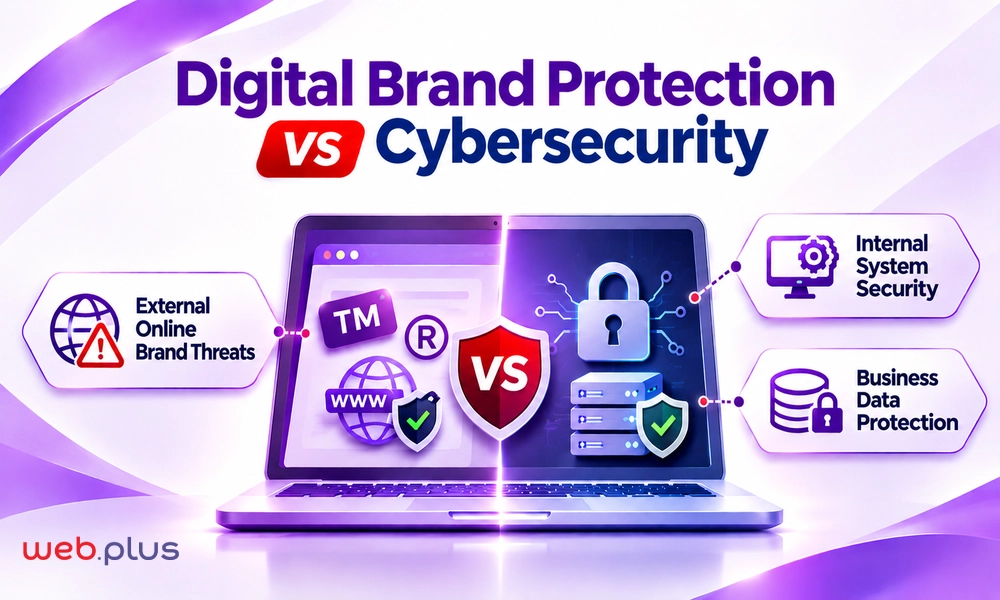
Cybersecurity protects an organisation’s systems, networks, applications and information from digital threats. Digital Brand Protection focuses on identifying and addressing the misuse of a company’s brand, identity and digital presence online. While their responsibilities overlap, they address different aspects of business risk, and organisations can benefit from using both together.
Imagine two situations:
In the first, an attacker gains unauthorised access to a company’s internal systems and steals sensitive customer information.
In the second, a fraudster creates a convincing imitation of the company’s website, using a lookalike domain name to deceive customers into making payments.
Both are digital security incidents. However, they involve different assets, attack methods, and responses.
The first primarily concerns cybersecurity. The second is a common example of Digital Brand Protection, although cybersecurity teams may also become involved.
For businesses operating online, understanding this distinction is essential to building a more complete digital risk management strategy.
What Is Cybersecurity?
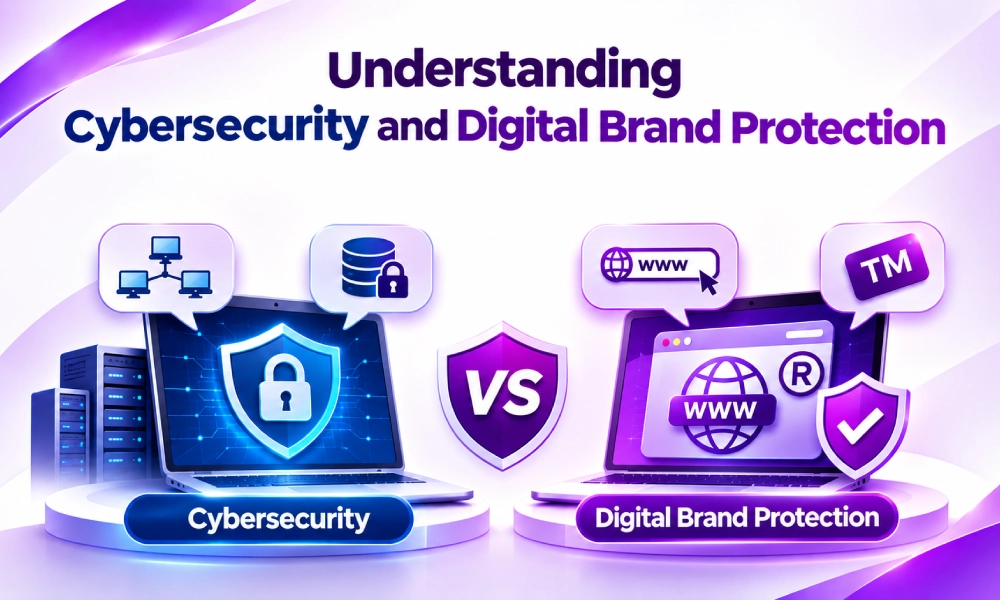
Cybersecurity is the practice of protecting information systems, networks, applications, devices and data against unauthorised access, attacks, damage and disruption.
Its purpose is to help organisations maintain the confidentiality, integrity and availability of their digital systems and information.
Common cybersecurity threats include:
- Ransomware: Malicious software that can encrypt data or disrupt access to systems, often accompanied by extortion demands.
- Malware: Software designed to compromise devices, applications or networks.
- Credential theft: Attempts to obtain passwords, authentication tokens or other access credentials.
- Data breaches: Unauthorised access to or disclosure of sensitive information.
- Software vulnerabilities: Weaknesses that attackers may exploit to compromise systems.
Businesses typically address these risks through measures such as access controls, vulnerability management, endpoint protection, network security, monitoring, backups and incident response.
The focus is on protecting the organisation’s technology environment and the information it processes
What Is Digital Brand Protection?
Digital Brand Protection is the practice of identifying, assessing and responding to unauthorised or harmful uses of a business’s brand and digital identity across online channels.
It focuses particularly on threats that may exist outside the organisation’s own infrastructure.
Examples include:
- Lookalike or typosquatting domains that resemble an official company website.
- Fake websites impersonating a legitimate business.
- Phishing pages using a company’s name, logo, or visual identity.
- Fraudulent social media accounts posing as the organisation.
- Unauthorised brand use on digital platforms or marketplaces.
Consider a business operating at yourbrand.com.
A fraudster might register a visually similar domain and create a website that imitates the company’s branding.
The legitimate business’s systems may remain secure, but customers could still mistake the fraudulent website for the official one.
This illustrates an important point:
An organisation can have strong internal cybersecurity controls and still face threats involving external brand impersonation.
Digital Brand Protection helps organisations gain visibility into these threats and determine what action may be appropriate.
Digital Brand Protection vs Cybersecurity: Key Differences
| Area | Cybersecurity | Digital Brand Protection |
|---|---|---|
| Primary focus | Protecting systems, applications, networks and information | Protecting brand identity and digital presence from online misuse |
| Typical threats | Ransomware, malware, unauthorised access, data breaches | Lookalike domains, fake websites, impersonation and online brand abuse |
| Assets protected | IT infrastructure, business applications and data | Brand names, domains, trademarks, digital identities and customer-facing presence |
| Common activities | Vulnerability management, access controls, monitoring and incident response | Brand monitoring, domain risk assessment, abuse reporting and enforcement support |
| Responsible teams | IT, security operations and information security | Brand, legal, fraud, domain management and security teams |
| Business objective | Reduce cyber risk and support operational resilience | Reduce exposure to brand misuse, fraud and customer confusion |
These are not mutually exclusive responsibilities.
For example, a phishing website impersonating a bank can be both a cybersecurity threat and a brand protection concern.
The cybersecurity team may investigate the phishing activity, while brand protection specialists help document impersonation and coordinate appropriate abuse reports or enforcement actions.
Misconception 1: Digital Brand Protection Is Only for Large Enterprises

Large organisations often manage extensive brand portfolios and digital assets, making Digital Brand Protection an important operational consideration.
However, brand impersonation is not limited to multinational companies.
Small and medium-sized businesses can also be targeted through fake websites, fraudulent social media accounts, or lookalike domains.
Consider a growing Malaysian e-commerce business.
Its customers may regularly interact with the brand through its website, online advertisements and social media channels.
If an impersonator creates a fake storefront using similar branding, customers could be misled even if the business’s actual website has not been compromised.
The business may face customer complaints, reputational concerns, and additional work investigating the incident.
The need for Digital Brand Protection therefore depends on factors such as:
- How much the business relies on its online identity.
- Whether customers make payments or share information through digital channels.
- The likelihood and consequences of brand impersonation.
- The number of domains, markets and platforms where the brand operates.
- The resources available to identify and respond to abuse.
Digital Brand Protection should be proportionate to business risk not determined by company size alone.
For smaller organisations, this may begin with protecting key domains, monitoring relevant online channels and establishing clear reporting procedures.
Larger organisations may require more extensive monitoring and coordinated enforcement processes.
Misconception 2: Monitoring Automatically Removes Online Threats
Another common misunderstanding is that identifying a suspicious domain or website means it will automatically disappear.
In practice, monitoring and enforcement are different activities.
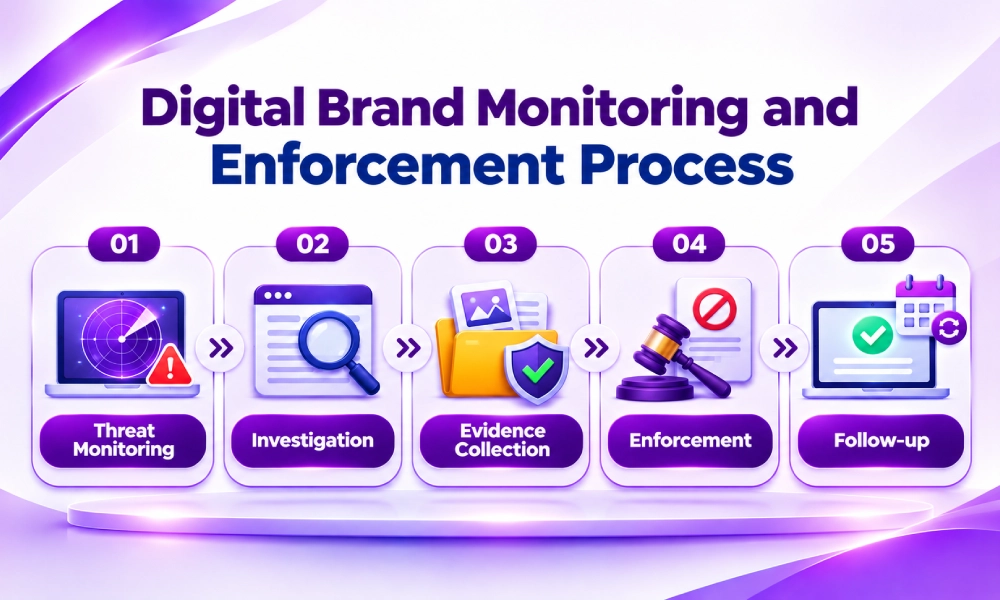
Digital Brand Protection typically involves several stages.
1. Monitoring and Detection
Identify potentially suspicious domains, websites, impersonation attempts or other relevant online activity.
2. Investigation and Verification
Assess whether the activity represents genuine misuse, fraud, infringement or another actionable concern.
A domain name resembling a trademark is not automatically unlawful or malicious.
3. Evidence Collection
Document relevant information, such as URLs, screenshots, registration details and evidence of impersonation or abuse.
4. Reporting and Enforcement
Where appropriate, submit abuse reports, platform complaints, registry or registrar requests, or pursue applicable dispute resolution procedures.
5. Follow-Up and Monitoring
Track the response and determine whether further action is necessary.
Detection creates awareness. Enforcement requires evidence, appropriate procedures and action by the relevant parties.
Not every report result in a takedown. Outcomes depend on the facts, applicable policies, legal rights, and the authority of the parties involved.
This is why businesses should evaluate both monitoring capabilities and the processes available for responding to confirmed threats.
Why Digital Brand Protection and Cybersecurity Should Work Together
A business’s digital environment extends beyond the systems it directly operates.
Customers encounter its identity through websites, domains, emails, social platforms, and other online services.
Attackers may exploit these connections without first compromising the organisation’s internal infrastructure.
For example, an attacker might create a fake website impersonating a financial services provider.
A coordinated response could involve:
- Cybersecurity teams investigating phishing activity, assessing credential exposure and identifying related technical threats.
- Brand protection teams verifying impersonation, documenting misuse and coordinating appropriate reports or enforcement.
- Domain administrators reviewing relevant domains and domain security controls.
- Legal and compliance teams assessing rights, reporting obligations and available remedies.
- Customer communications teams providing accurate guidance through official channels.
Each function contributes different expertise.
Together, they can help the organisation respond more effectively to threats affecting both its technical environment and public-facing identity.
How Can Businesses Strengthen Their Digital Protection Strategy?
Organisations do not necessarily need to implement every security technology immediately.
A practical starting point is to understand which assets and risks matter most.
1. Identify Critical Digital Assets
Maintain an inventory of important domains, websites, brand names, trademarks and customer-facing platforms.
2. Assess Internal and External Threats
Review risks affecting systems and information alongside potential brand impersonation, fraudulent domains and online abuse.
3. Strengthen Domain Management
Secure domain administration accounts, review access permissions and enable relevant domain protection controls where supported.
4. Establish Appropriate Brand Monitoring
Determine which brand names, domain variations, markets and online channels require monitoring based on business exposure.
5. Define an Incident Response Process
Clarify who investigates suspicious activity, collects evidence, contacts service providers and communicates with customers.
6. Coordinate Across Departments
Encourage collaboration between IT, cybersecurity, legal, brand management and relevant business teams.
7. Review Protection Measures Regularly
As the business expands into new markets, launches products or adopts new digital channels, reassess its security and brand protection needs.
These practices help organisations take a more structured approach to protecting their digital presence.
Where Does Web.Plus Fit into Digital Brand Protection?
At Web.Plus, we view Digital Brand Protection as an important part of a broader Digital Trust strategy.
Our Digital Brand Protection solution area focuses on helping organisations safeguard their brands and digital presence through domain portfolio protection, brand monitoring, threat identification and enforcement-related support.
These activities complement, rather than replace, traditional cybersecurity measures.
For businesses, the objective is to improve visibility over relevant external brand threats, support informed responses, and strengthen the management of important digital assets.
Conclusion: Protecting Your Business Means Looking Beyond Your Own Systems
Cybersecurity and Digital Brand Protection serve different but complementary purposes.
Cybersecurity helps protect the technology, and information businesses depend on.
Digital Brand Protection addresses threats involving how a business’s identity and brand are represented or misused online.
Neither discipline alone addresses every digital risk.
For organisations of any size, a stronger approach begins with understanding where threats may arise, establishing appropriate controls and ensuring the right teams can respond effectively.
Your systems may be secure. But how well do you know what is happening to your brand outside those systems?
Explore how Web.Plus’s Digital Brand Protection expertise can support your organisation’s broader Digital Trust strategy
Web.Plus — Where Trust Drives It All
Frequently Asked Questions
1. What is the main difference between Digital Brand Protection and cybersecurity?
Cybersecurity primarily protects systems, networks, applications, and information. Digital Brand Protection focuses on identifying and addressing online misuse of a company's brand and digital identity. Their responsibilities can overlap, particularly in phishing and impersonation incidents.
2. Is Digital Brand Protection part of cybersecurity?
Digital Brand Protection is a related discipline that can complement cybersecurity, fraud prevention, and intellectual property protection. It is especially relevant when threats involve external websites, domains, or online identities impersonating a legitimate business.
3. Do small businesses need Digital Brand Protection?
Small businesses can benefit from Digital Brand Protection when they face meaningful risks involving impersonation, fraudulent websites, or online brand misuse. The appropriate level of protection depends on their exposure, business model, and available resources.
4. Does brand monitoring automatically remove fake websites?
No. Monitoring helps identify suspicious activity. Removing a fraudulent website may require investigation, evidence collection, abuse reporting, platform cooperation, or legal procedures. Removal is not guaranteed.
5. Can cybersecurity tools detect fake websites impersonating a business?
Some cybersecurity tools can detect phishing websites, malicious domains, and related threats. However, coverage varies. Dedicated brand monitoring may provide additional visibility into online impersonation and brand misuse.
6. What are the common signs of online brand impersonation?
Examples include lookalike domain names, websites copying official branding, unauthorised social media accounts, and suspicious payment requests. Each case should be assessed before determining whether it represents fraud or infringement.
7. How can Digital Brand Protection and cybersecurity teams work together?
They can coordinate threat monitoring, investigation, evidence collection, abuse reporting, incident response, and customer communications. Clear responsibilities help organisations respond consistently to threats affecting both digital infrastructure and brand identity.