
Cybersecurity Threats in 2026: Is Your Business Prepared?
Cyberattacks are no longer just an IT concern. Recent incidents across healthcare, telecommunications, government and critical infrastructure show why organisations need to treat cybersecurity as an ongoing business priority.
What would happen if your organisation suddenly lost access to a critical system? Could your employees continue working, customers access essential services, and business operations recover without significant disruption?
These are questions every business should be asking.
In 2026, cybersecurity incidents have continued to affect organisations across industries. From ransomware targeting businesses in Malaysia to sophisticated attacks against Singapore’s telecommunications infrastructure, recent developments highlight how cyber risks can extend beyond individual systems.
In September 2026, oncology company Novocure disclosed a cyber incident that exposed internal records relating to more than 1,400 US patients. In November, a separate attack affected cold-storage monitoring systems at French blood service facilities.
The lesson is clear: Cybersecurity is not simply about preventing attacks. It is about protecting the systems, information and relationships that keep businesses operating.
The Growing Cybersecurity Threat Landscape
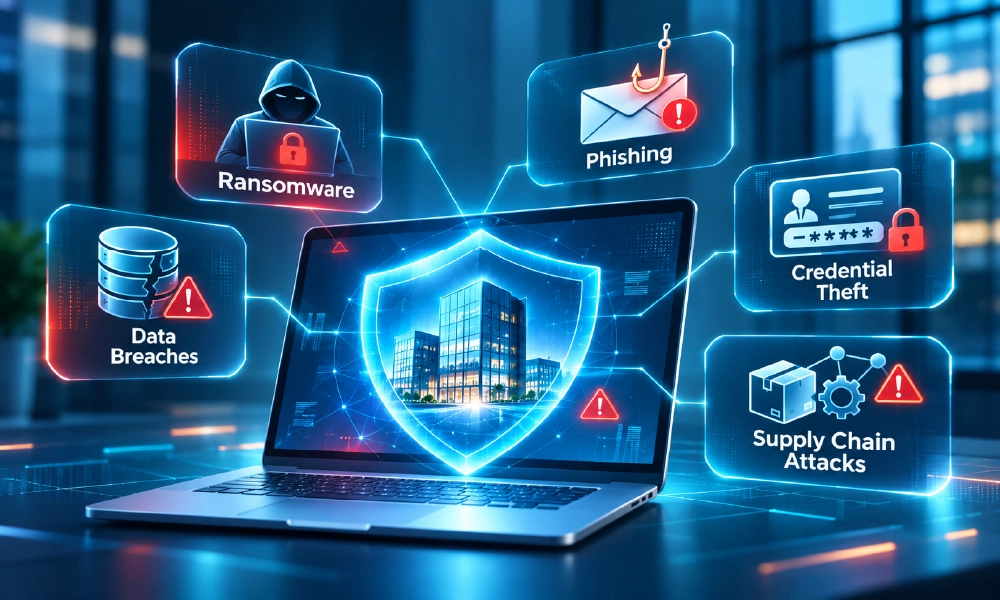
Cyber threats continue to evolve as organisations become more dependent on interconnected technologies, cloud services, external providers and digital infrastructure.
Several incidents illustrate the challenges businesses face.
Malaysia: Ransomware Remains an Operational Risk
In July 2026, Malaysia’s MyCERT issued an advisory highlighting ransomware activity affecting organisations across the country.
According to its Cyber999 incident response observations, Malaysia recorded 51 ransomware incidents in 2025 and 29 incidents during the first two quarters of 2026.
Ransomware can encrypt files, disrupt access to systems and, in some cases, involve the theft of sensitive information.
For businesses, the consequences can include interrupted operations, recovery costs and potential exposure of confidential data.
Source : https://mycert.org.my/portal/advisory?id=MA-1479.072026
Singapore: Critical Telecommunications Infrastructure Targeted
In February 2026, Singapore’s Cyber Security Agency disclosed details of a sophisticated cyber campaign targeting all four major telecommunications operators: Singtel, StarHub, M1 and SIMBA Telecom.
The campaign, attributed to the advanced persistent threat actor UNC3886, involved techniques including exploitation of a previously unknown vulnerability and tools designed to maintain hidden access.
Authorities confirmed that attackers gained unauthorised access to some systems. However, they reported no evidence that sensitive customer information had been stolen or telecommunications services disrupted.
The incident demonstrates the importance of continuous monitoring, coordinated incident response and securing infrastructure that supports essential services.
Healthcare: Sensitive Information and Essential Systems at Risk
In August 2026, Novocure experienced unauthorised access to certain information systems. The company subsequently disclosed that internal records associated with more than 1,400 US patients had been exposed.
Novocure stated that its medical treatment devices were not accessed and its systems remained operational.
Separately, in early November 2026, a cyberattack affected cold-storage monitoring and control systems at three regional facilities of France’s blood service.
Staff transferred blood to unaffected refrigeration equipment, and authorities reported that blood supplies were not impacted.
These incidents illustrate different cybersecurity consequences: exposure of information in one case and interference with operational technology in another.
Both reinforce the importance of protecting sensitive information while maintaining reliable business and service operations.
What Do These Cyberattacks Mean for Businesses?
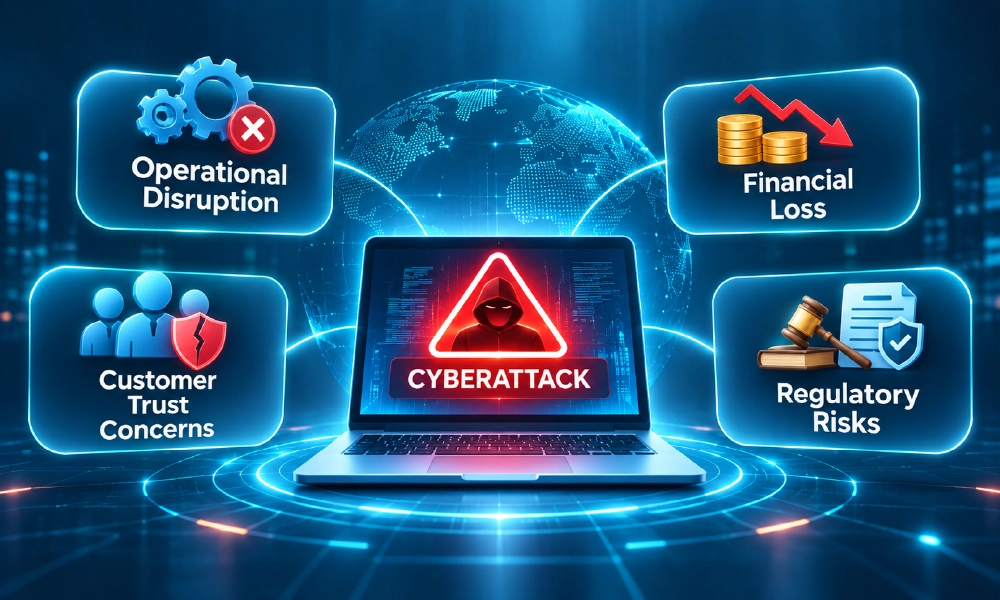
A cyberattack does not need to cause a complete system shutdown to create business risk.
1. Business Continuity and Operational Disruption
Compromised systems may interrupt essential workflows, delay customer services or prevent employees from accessing business applications.
Organisations that depend heavily on third-party platforms may also be affected when a supplier experiences a cybersecurity incident
2. Financial and Recovery Costs
Cyber incidents can generate expenses related to investigation, recovery, system restoration, legal advice and additional security measures.
The financial consequences depend on the severity of the incident, the systems affected and the organisation’s ability to respond.
3. Customer Trust and Reputation
Customers expect businesses to handle their information responsibly and maintain reliable digital services.
A breach involving sensitive information can create concerns about how that information is protected, even when core operations continue.
4. Regulatory and Contractual Responsibilities
Depending on the jurisdiction, industry and information involved, organisations may have obligations relating to data protection, incident reporting or cybersecurity controls.
Businesses operating across multiple markets should understand which requirements apply to their systems, information and services.
Why Reactive Cybersecurity Is No Longer Enough
Many organisations strengthen their cybersecurity only after an incident exposes a weakness.
However, reactive measures alone may leave important risks undetected until attackers have already gained access.
A more effective approach is to treat cybersecurity as a continuous business process.
This means regularly reviewing vulnerabilities, monitoring systems, managing access permissions, maintaining security updates and testing incident response procedures.
It also requires visibility into the digital infrastructure that supports business operations, including domains, websites, servers, applications and digital certificates.
The objective is not to eliminate every possible threat. It is to reduce avoidable exposure, detect suspicious activity earlier and improve the organisation’s ability to respond and recover.
Building a Stronger Cybersecurity Foundation
Effective cybersecurity requires multiple layers of protection. Different technologies address different risks, and no single solution can secure an entire organisation.
SSL/TLS Certificates: Protecting Data in Transit
SSL/TLS certificates help establish authenticated, encrypted connections between clients and servers.
They are essential for protecting information transmitted through websites and other supported services.
However, SSL/TLS certificates do not prevent ransomware, credential theft or all forms of phishing. A fraudulent website may also use HTTPS.
Public Key Infrastructure: Supporting Digital Identity and Authentication
Public Key Infrastructure (PKI) provides a framework for issuing, managing and validating digital certificates.
Organisations can use PKI to support trusted digital identities, authentication and encrypted communications across appropriate systems and applications.
Certificate Lifecycle Management: Maintaining Visibility and Control
As organisations manage more digital services, tracking certificate ownership, validity and renewal becomes increasingly important.
Certificate Lifecycle Management (CLM) helps organisations discover, monitor and manage digital certificates throughout their lifecycle.
This is particularly relevant as public TLS certificate validity periods become shorter.
Under CA/Browser Forum requirements, the maximum validity period for newly issued public TLS server certificates decreased to 200 days from 15 March 2026, with further reductions scheduled.
Effective certificate lifecycle processes can help reduce avoidable outages caused by expired certificates and improve visibility into certificate-related risks.
Digital Trust and Domain Management
Domains and digital certificates are important components of an organisation’s digital identity.
Maintaining accurate domain records, protecting administrative accounts, controlling transfer permissions and managing certificates can help reduce risks associated with unauthorised changes, impersonation and service disruption.
These controls complement broader cybersecurity measures such as endpoint protection, vulnerability management, network monitoring and incident response.
Seven Practical Cybersecurity Measures Businesses Should Prioritise
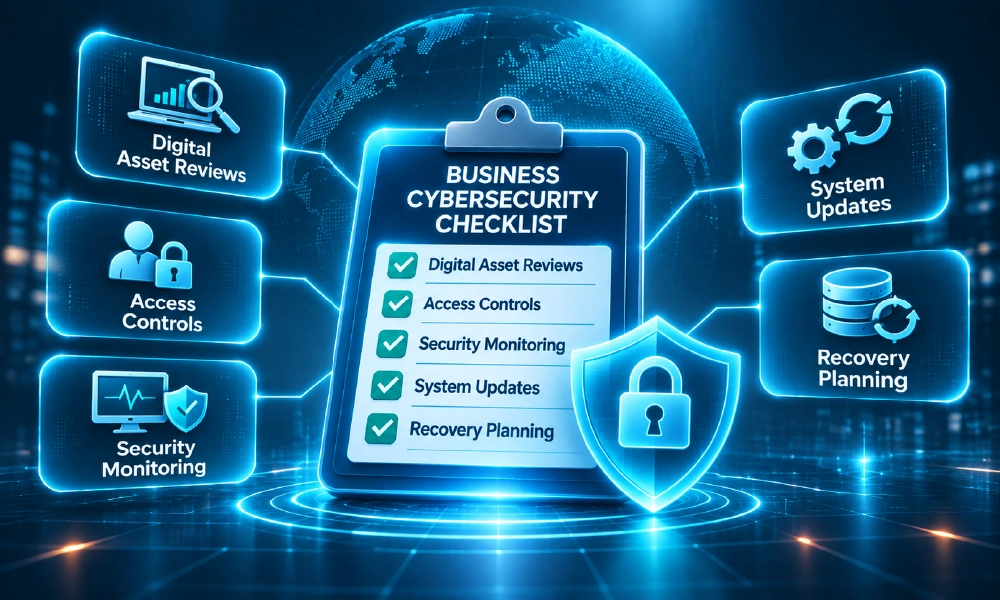
Organisations can begin strengthening their security posture through the following actions:
1. Review Critical Systems and Digital Assets
Maintain an updated inventory of essential applications, servers, domains, certificates and third-party services. Identify which assets are most important to business operations.
2. Strengthen Identity and Access Controls
Enable multi-factor authentication where supported, apply least-privilege access and regularly review administrator permissions.
3. Prioritise Vulnerability Management
Monitor relevant security advisories, assess exposed systems and apply security updates according to risk and operational requirements.
4. Improve Monitoring and Incident Detection
Establish appropriate logging, alerting and monitoring processes to help identify suspicious activities and unauthorised access.
5. Protect Domains and Digital Certificates
Review domain account security, transfer protection, certificate inventories and renewal procedures. Consider certificate lifecycle automation where appropriate.
6. Prepare and Test Recovery Procedures
Maintain protected backups, test restoration processes and establish an incident response plan with clear responsibilities.
7. Build Cybersecurity Awareness Across Teams
Educate employees on phishing, suspicious requests, credential protection and incident reporting. Include business functions such as finance, procurement and administration.
Cybersecurity readiness depends on technology, processes and people working together.
Cybersecurity Is a Continuous Business Responsibility
Recent cybersecurity incidents demonstrate that businesses and critical infrastructure operators face different forms of cyber risk, from ransomware and unauthorised access to disruptions involving connected operational systems.
The question is no longer whether an organisation has installed security tools. It is whether those tools, policies and processes provide appropriate protection for its current digital environment.
Are critical assets properly identified? Are access permissions reviewed? Can suspicious activities be detected? Are domain and certificate lifecycles managed effectively? Can essential services recover if an incident occurs?
These questions deserve attention before a security incident exposes the answers.
At Web.Plus, we recognise the importance of Digital Trust as part of a stronger digital security foundation. Through expertise in digital brand management, digital certificates, PKI and certificate lifecycle management, Web.Plus supports organisations in managing important elements of their digital identity and trust infrastructure.
Cybersecurity readiness begins with understanding what needs protection, identifying potential weaknesses and taking consistent action to strengthen digital resilience.
Explore Web.Plus’s Digital Trust solutions and consider whether your organisation’s current domain and certificate management practices are prepared for today’s security requirements
Contact Us
Frequently Asked Questions
Businesses face threats including ransomware, phishing, credential theft, data breaches, software vulnerability exploitation and attacks involving third-party suppliers. The risks vary according to an organisation’s industry, infrastructure and security controls.
Cybersecurity helps protect business operations, sensitive information, digital services and customer trust. Weak security controls can increase the likelihood or impact of financial losses, service disruption and data exposure.
Businesses can strengthen access controls, maintain updated software, protect critical data, monitor suspicious activity, secure domain and certificate management, and regularly test incident response procedures.
SSL/TLS certificates support authenticated, encrypted communications between clients and servers. They do not independently prevent ransomware, phishing, malware infections or unauthorised access to other systems.