
Fake Domain Renewal Notices: How Businesses Can Stay Protected
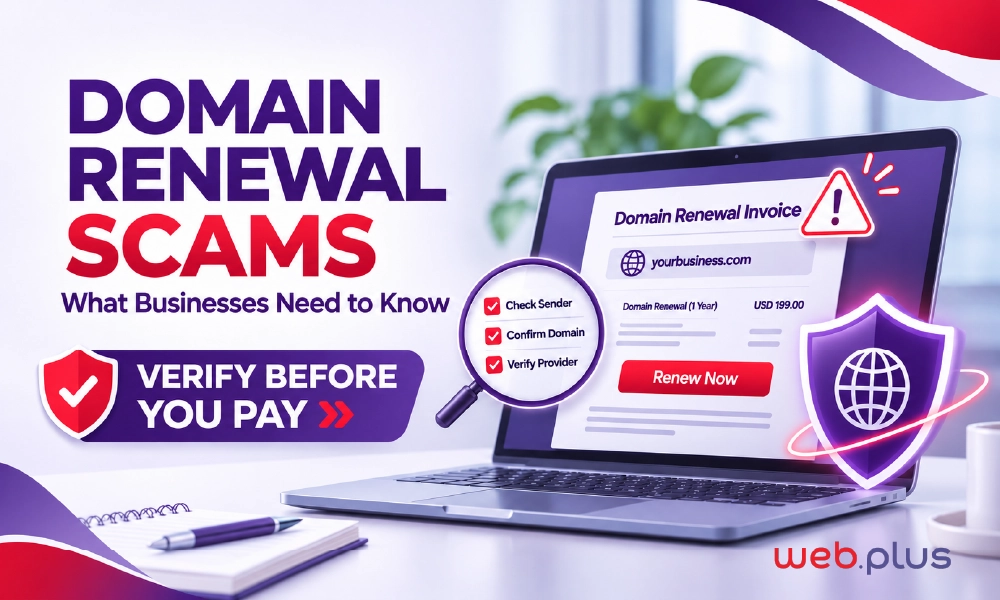
Protect Your Business Domains and Digital Identity from Fraudulent Renewal Scams
Your domain name is more than a website address. It is a critical part of your organisation’s digital identity, supporting your website, business communications, and online services.
Web.Plus would like to remind businesses and domain owners to remain vigilant against fake domain renewal notices distributed through email, postal mail, and other communication channels.
These fraudulent or misleading notices may appear to come from legitimate domain registrars or service providers. Their purpose may be to trick recipients into making unnecessary payments, disclosing sensitive information, or transferring domains to unauthorised providers.
For organisations managing multiple domains, a single misleading notice can create unnecessary financial, operational, and security risks.
Our key reminder: Verify before you pay
What Is a Fake Domain Renewal Notice?
A fake domain renewal notice is a fraudulent or misleading communication designed to resemble an official domain renewal reminder, invoice, or expiry notification.
These notices may contain urgent messages such as:
- “Your Domain Is Expiring Soon”
- “Final Domain Renewal Reminder”
- “Immediate Payment Required”
- “Your Domain Will Be Suspended”
Some may include accurate domain names, registration information, or expiry dates to make the communication appear credible.
However, accurate domain information does not automatically confirm that the sender is legitimate.
Legitimate domain service providers also send renewal reminders, including urgent notifications as expiry dates approach. The key distinction is whether you can independently verify the request through your organisation’s authorised domain management channels.
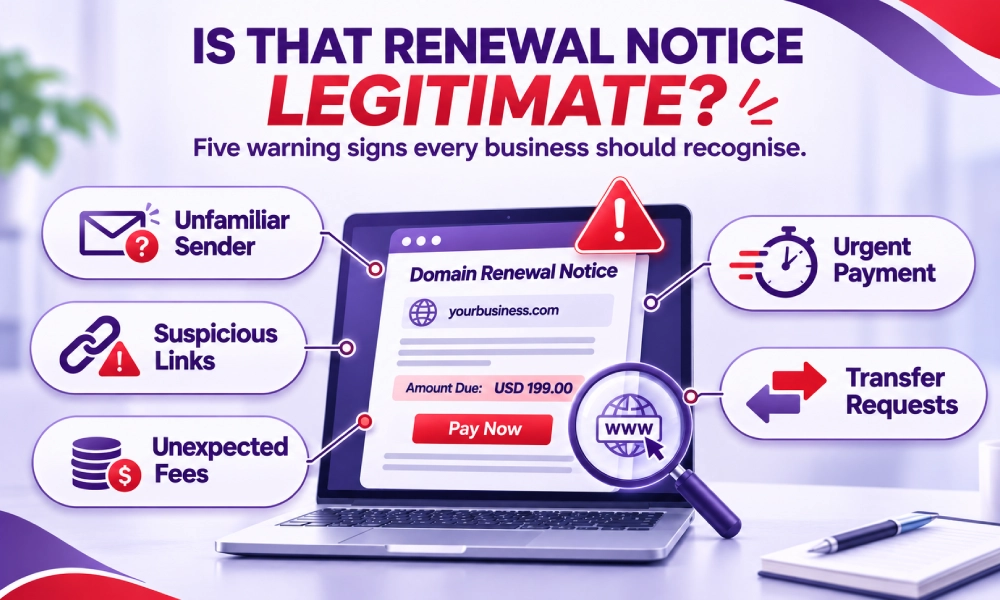
Five Warning Signs of a Fake Domain Renewal Notice
1. Unfamiliar Sender
The notice comes from an unknown company or an email address that does not match your organisation’s existing domain service provider.
2. Urgent Payment Demands
The message pressures you to make an immediate payment to prevent domain suspension, cancellation, or loss.
3. Suspicious Payment Links
The notice directs you to unfamiliar websites, payment portals, or unverified payment channels.
4. Unexpected Renewal Fees
The communication contains unfamiliar charges, unusually high renewal fees, or services presented as mandatory requirements.
5. Unauthorised Domain Transfer Requests
The notice encourages you to transfer your domain to another registrar while presenting the transfer as a required renewal procedure.
An unexpected transfer request deserves particular attention because it may affect how your organisation manages and controls its domain portfolio.
What Should Your Organisation Do?
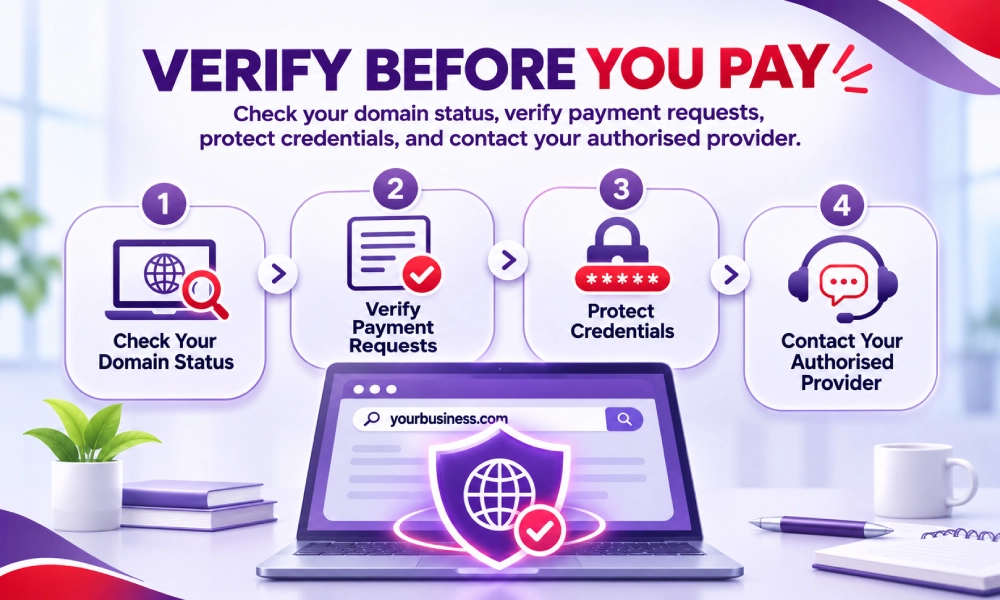
If your team receives a suspicious domain renewal notice, follow these precautions before taking action.
1. Verify the Domain's Renewal Status
Access your organisation’s official domain management portal directly.
Check the domain’s actual expiry date, renewal status, and any outstanding invoices.
For organisations managing multiple domains, confirm the details against your internal domain inventory or approved renewal schedule.
2. Do Not Make Unverified Payments
Avoid processing payments based solely on an unexpected email, letter, or invoice.
Ensure that domain-related payments follow your organisation’s established procurement and approval procedures.
3. Avoid Suspicious Links and Attachments
Do not click unfamiliar links or download unexpected attachments from unverified senders.
Access your domain service provider’s official website directly rather than using links in a suspicious message.
4. Protect Sensitive Domain Information
Never disclose confidential account information to unknown or unverified parties, including:
- Domain management account credentials.
- One-time passwords or verification codes.
- Domain transfer authorisation codes (EPP/Auth Codes).
- Payment information.
- Other sensitive administrative details.
5. Confirm Requests with Your Authorised Provider
If a renewal notice appears suspicious, contact your existing registrar, reseller, or authorised domain management partner through established support channels.
For organisations with designated IT, security, or domain administration teams, escalate unfamiliar renewal and transfer requests for verification before proceeding.
Why Domain Renewal Fraud Matters to Businesses
Domain names support essential business activities, including corporate websites, customer communications, and digital services.
Fraudulent renewal notices can create risks beyond unnecessary payments.
Depending on the circumstances, these may include:
Financial Loss
Employees may process payments for services that were never requested or authorised.
Unauthorised Domain Transfers
Misleading transfer requests may result in domains being moved to an unintended provider.
Exposure of Sensitive Information
Fraudulent websites or communications may be used to collect account credentials, payment details, or domain transfer codes.
Operational Disruption
Compromised domain management accounts or unauthorised domain changes may affect business websites, email services, or other connected systems.
These risks highlight why domain renewal verification should be part of an organisation’s broader digital asset management and security practices.
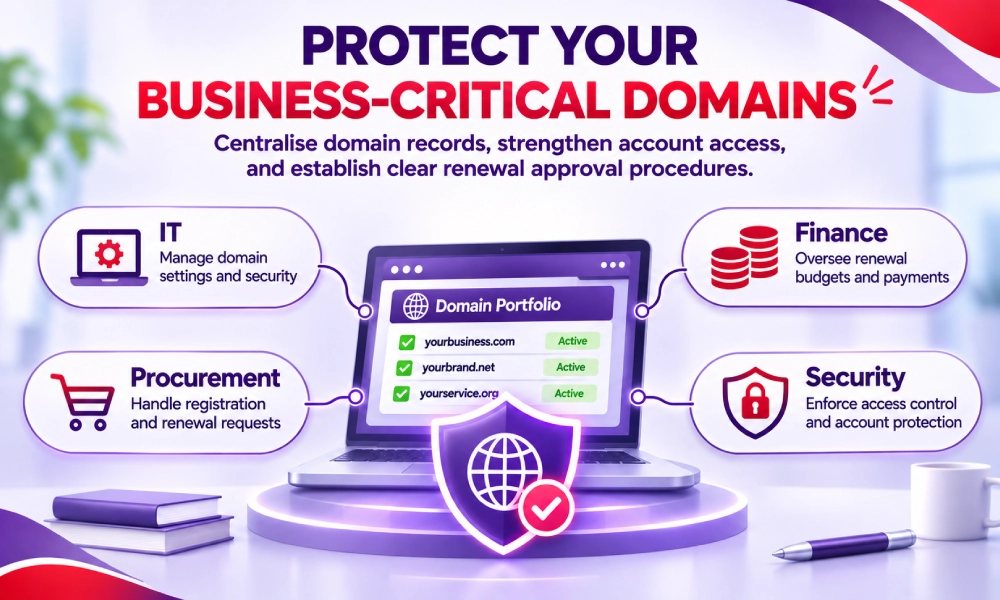
Strengthen Your Organisation's Domain Management Practices
Businesses can reduce unnecessary exposure to fraudulent renewal requests by establishing clear domain management procedures.
We recommend the following practices:
- Maintain a centralised domain inventory: Keep an accurate record of business domains, authorised providers, expiry dates, and responsible administrators.
- Establish renewal approval procedures: Ensure domain-related payments and transfer requests are reviewed by authorised personnel.
- Strengthen account security: Use strong passwords, enable multi-factor authentication where supported, and limit administrative access.
- Review domain transfer protection: Check available registrar lock and transfer protection settings for business-critical domains.
- Educate relevant teams: Ensure IT, finance, procurement, and administrative personnel understand how to recognise and verify suspicious renewal notices.
- Use trusted communication channels: Confirm unfamiliar domain-related requests directly with your authorised domain service provider.
For organisations managing extensive domain portfolios, consistent oversight and clear ownership responsibilities are particularly important.
Important Reminder: Verify Before You Pay
Receiving a domain renewal notice does not necessarily mean your domain is expiring or that payment is required.
Before taking action, verify the notice against your organisation’s domain records and confirm the request through your authorised service provider.
An unexpected request to transfer a domain should also be reviewed carefully. Renewing a domain and transferring it to another registrar are different processes.
Stay Alert. Protect Your Digital Identity.
Your organisation’s domain names are important digital assets that support business continuity, brand identity, and customer trust.
Protecting them requires more than timely renewals. It also requires clear administrative controls, secure account management, and awareness of fraudulent communications.
At Web.Plus, we believe that responsible domain management is an important foundation of Digital Trust.
We encourage businesses to remain vigilant, educate their teams, and verify suspicious domain-related requests through trusted channels.
When in doubt, verify before you pay