
Security Trends 2026: What Businesses Need to Prepare for
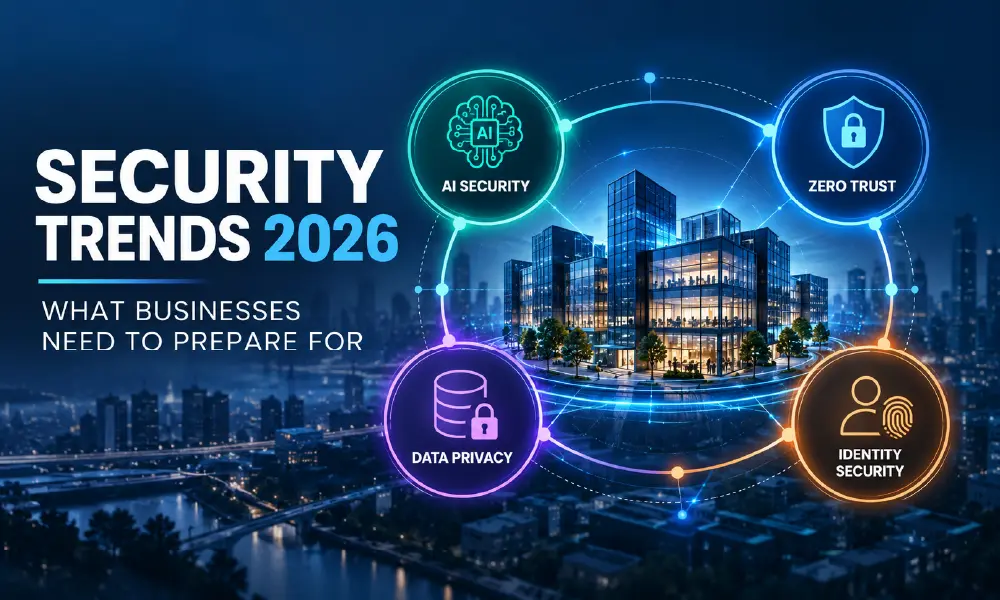
Cybersecurity is changing quickly, and businesses are facing threats that are becoming harder to predict, detect, and manage.
AI-powered attacks, expanding cloud environments, stricter data privacy requirements, and increasingly complex digital identities are changing how organisations need to approach security in 2026.
The challenge is no longer simply keeping attackers outside the network.
Businesses now need to consider who and what they trust, how access is verified, how sensitive information is protected, and how emerging technologies such as AI affect their overall security posture.
This makes cybersecurity more than an IT concern. Security decisions can affect business continuity, regulatory compliance, customer trust, and long-term digital strategy.
So, what should businesses be paying attention to? Let’s break down four important security trends shaping 2026.
AI Is Changing Both Cyberattacks and Cyber Defence
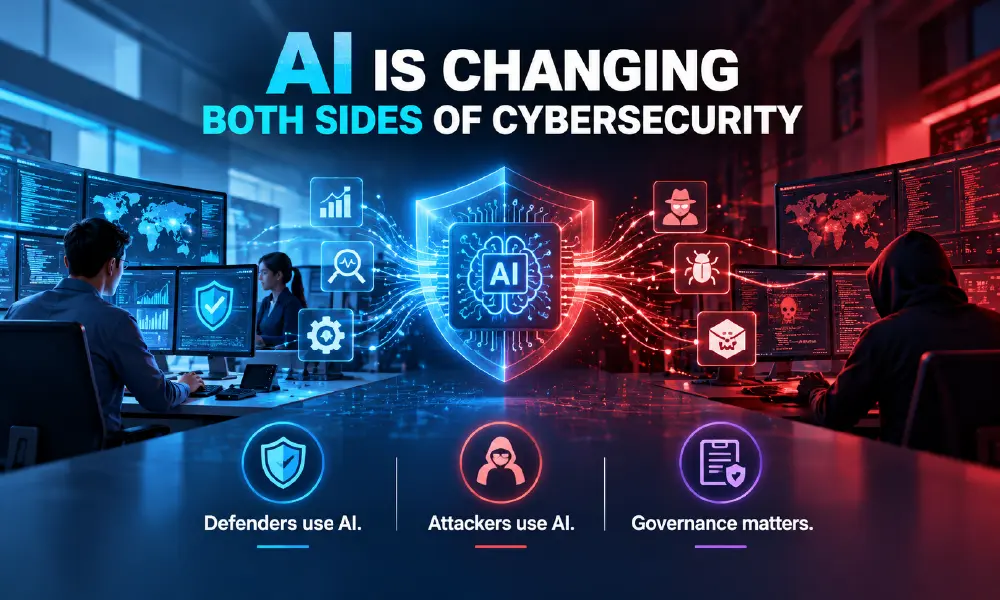
Artificial intelligence is becoming increasingly important on both sides of cybersecurity.
Security teams can use AI to analyse large volumes of information, identify unusual activity, prioritise potential threats, and automate parts of incident response.
At the same time, attackers can use AI to increase the speed and scale of their activities.
This creates an important shift:
AI is becoming both a cybersecurity tool and a cybersecurity risk.
Another development businesses should watch is the growing use of autonomous or agentic AI systems that can operate with relatively little human intervention.
As AI systems gain the ability to perform more tasks independently, organisations need to think carefully about the information these systems can access, the actions they can perform, and how those actions are controlled.
AI adoption should therefore go hand in hand with appropriate security controls and governance.
What Should Businesses Consider?
Organisations introducing AI into their operations should consider:
- What information AI systems can access
- Who can use those systems
- How AI-generated actions are monitored
- How sensitive information is protected
- What happens when an AI system behaves unexpectedly
- Where human approval should remain necessary
- AI can improve efficiency, but greater automation can also introduce new risks if access and governance are not properly controlled.
Zero Trust Is Becoming More Important
Traditional cybersecurity focused heavily on protecting the organisation’s network perimeter.
However, today’s IT environment extends far beyond that boundary.
Employees work remotely. Applications operate across multiple cloud environments. Partners and contractors access company systems. Devices connect from different locations.
Simply being inside the corporate network can therefore no longer be treated as a sign of trust.
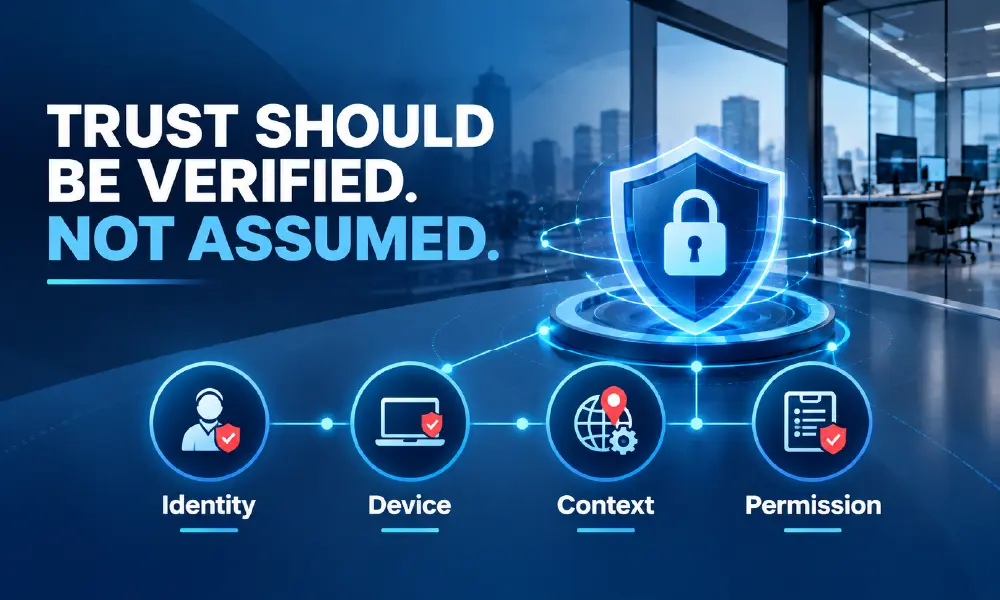
Organisations increasingly need to verify access based on identity, device, context, and permissions rather than location alone.
This is where Zero Trust becomes important.
What Is Zero Trust?
Zero Trust is based on a simple principle:
Do not assume something should be trusted simply because it is already inside the network.
Instead, access should be evaluated and granted according to what a user, device, application, or service needs.
What Can Zero Trust Include?
Depending on the organisation, a Zero Trust strategy may involve:
- Strong identity verification
- Multi-factor authentication
- Least-privilege access
- Device verification
- Network segmentation
- Continuous monitoring
- Access policies based on risk and context
Businesses can introduce Zero Trust principles gradually, starting with their most important systems, identities, and access points.
Data Privacy Is Becoming Part of Cybersecurity Strategy
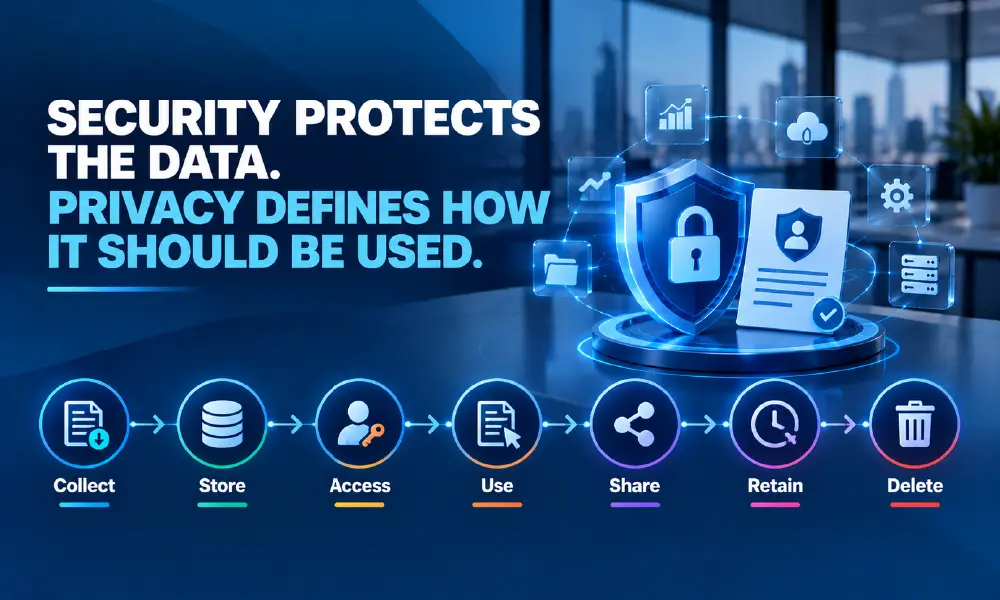
Cybersecurity and data privacy are closely connected.
Security asks:
How do we protect the data?
Privacy also asks:
Why do we have the data, how can we use it, who should have access to it, and how long should we keep it?
Businesses increasingly need to answer both questions.
As organisations collect and process more information across websites, cloud services, applications, and digital platforms, data privacy is becoming an increasingly important part of cybersecurity strategy.
Organisations operating internationally can face additional complexity because privacy requirements can differ between jurisdictions.
Why Does This Matter?
A business may collect information relating to:
- Customers
- Employees
- Partners
- Website visitors
- Transactions
- Accounts
- Devices
- Protecting that information requires more than preventing unauthorised access.
Businesses also need to understand where sensitive data exists, why it is being collected, how it is processed, and who can access it.
This brings security and privacy closer together.
Privacy by Design
Rather than adding privacy controls after a system has already been built, organisations can consider privacy requirements from the beginning.
This may include:
- Data classification
- Access controls
- Consent management
- Data retention policies
- Encryption
- Monitoring
- Incident and breach response procedures
The objective is to make security and privacy part of the way systems and processes are designed, rather than treating them only as requirements to address later.
Identity Security Is Expanding Beyond People
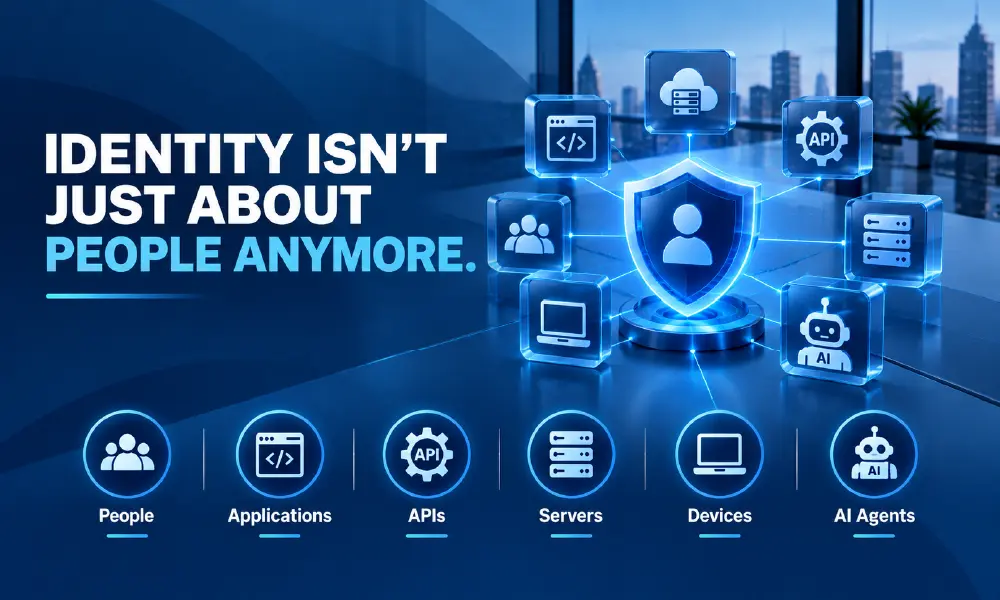
When businesses think about digital identity, they often think about employees logging into applications. That is only part of today’s identity landscape.
Modern organisations can have identities associated with:
- Employees
- Customers
- Administrators
- Contractors
- Applications
- APIs
- Servers
- Cloud workloads
- IoT devices
- Automated systems
- AI agents
This creates an important security challenge.
Organisations now need to manage trust not only for people but also for applications, machines, devices, workloads, and automated systems.
The question is no longer simply:
“Who is this user?”
It is increasingly:
“What is this identity, can we trust it, and what should it be allowed to do?”
Machine Identities Matter Too
A machine may need to prove its identity before communicating securely with another system.
Digital certificates and Public Key Infrastructure (PKI), for example, can help establish and authenticate identities within digital environments.
As organisations operate larger numbers of connected services and devices, managing these identities can become increasingly complex.
Poorly managed credentials or identities can create unnecessary security exposure.
What Should Organisations Consider?
Businesses should understand:
- What identities exist
- What each identity can access
- How those identities are authenticated
- Whether unnecessary privileges exist
- How credentials are created and renewed
- How inactive identities are removed
- How machine identities are managed
How Can Businesses Prepare for Security Trends in 2026?
Understanding cybersecurity trends is useful. Turning that understanding into action is more important.
Businesses do not necessarily need to respond by introducing every new security technology at once. A more practical approach is to understand where the organisation faces the greatest risk and strengthen those areas progressively.
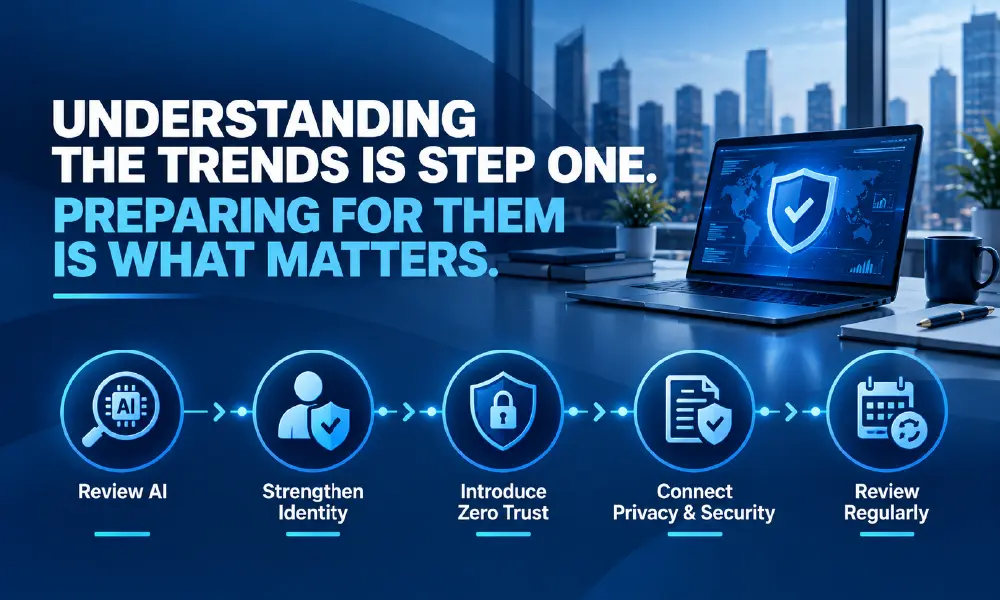
Here are five areas businesses can start reviewing:
1. Review How AI Is Being Used
Start by identifying the AI tools already being used across the organisation.
Understand:
- What information they access
- Who uses them
- What systems they connect to
- What actions they can perform
This is particularly important as AI becomes integrated into everyday workflows rather than remaining a standalone technology.
Organisations should understand not only which AI tools have been officially approved, but also how AI interacts with business information and systems.
2. Strengthen Identity and Access Management
Review who and what has access to important systems.
Ask:
- Does this person still need access?
- Does this account have more privileges than necessary?
- Is strong authentication being used?
- Are inactive accounts removed?
- Are machine identities being managed?
Identity security becomes more important as organisations add more employees, contractors, applications, cloud workloads, APIs, devices, and automated services.
3. Introduce Zero Trust Gradually
Zero Trust does not have to be a single large transformation project.
Start with high-risk areas.
For example:
Identity → Authentication → Critical Applications → Network Access → Continuous Monitoring
The approach can then expand as the organisation’s security capabilities mature.
This makes Zero Trust more manageable than attempting to redesign an entire security environment at once.
4. Bring Privacy and Security Together
Security and privacy teams should understand what sensitive information the organisation holds and how it moves between systems.
Consider the entire information lifecycle:
Collect → Store → Access → Use → Share → Retain → Delete
Each stage introduces different security and privacy considerations.
For example, an organisation may have strong encryption while data is stored but still retain information longer than necessary or provide access to more people than required.
Security controls therefore need to be considered alongside how information is collected, processed, retained, and eventually removed.
5. Review Your Security Strategy Regularly
Cybersecurity should not be treated as a project that is completed once.
- Technology changes
- Threats change
- Regulations change
- Businesses change
- Security controls therefore need to be reviewed as the organisation’s digital environment evolves.
A security approach that worked several years ago may not necessarily address today’s mix of cloud services, remote access, AI tools, machine identities, and connected applications.
What's Next for Cybersecurity Beyond 2026?
The security landscape will continue evolving beyond 2026. Among the developments organisations should keep on their radar are quantum-safe cryptography, security platform consolidation, and greater convergence between physical and digital security.
One particularly important area is quantum-safe cryptography.
Today’s widely used cryptographic systems were designed before sufficiently powerful quantum computers became a realistic future security consideration.
That is leading organisations and technology providers to prepare for Post-Quantum Cryptography (PQC) — cryptographic approaches designed to remain secure against attacks from sufficiently capable quantum computers.
This does not mean businesses need to replace every cryptographic system immediately.
However, organisations managing certificates, encryption, and other long-lived digital assets may increasingly need to understand:
- What cryptographic technologies they currently use
- Where certificates and keys exist
- Which systems depend on existing cryptographic algorithms
- How easily those technologies can be replaced or upgraded
- What a future migration to new cryptographic standards could involve
- Security in 2026 Is Ultimately About Digital Trust
AI, Zero Trust, privacy, and identity security may appear to be separate cybersecurity trends.
But they share something important.
They all ask organisations to answer fundamental questions:
Who should we trust?
What should they be allowed to access?
How do we verify that identity?
How do we protect the information being exchanged?
How do we maintain that trust as technology changes?
That makes cybersecurity increasingly connected to a broader concept: Digital Trust.
Businesses need customers, employees, partners, applications, and machines to interact securely across increasingly complex digital environments.
The organisations that prepare effectively will not simply adopt every new security technology.
Building Digital Trust for What’s Next
The cybersecurity trends shaping 2026 reinforce one important reality: organisations need stronger control over the identities, certificates and digital assets that their operations depend on.
Web.Plus supports organisations in strengthening Digital Trust through solutions including SSL/TLS certificates, Certificate Lifecycle Management (CLM), Digital Brand Protection and Abuse Management.
From improving certificate visibility and automation to strengthening digital identity and preparing cryptographic environments for future change, our approach helps organisations build a more manageable and resilient foundation for Digital Trust.
Speak with a Web.Plus expert to explore your Digital Trust requirements.
Frequently Asked Questions
Four important areas are AI security, Zero Trust, data privacy, and identity security.
AI is changing both cyber defence and cyberattacks, while distributed cloud environments and remote access are making traditional network boundaries less relevant. At the same time, organisations need to manage privacy requirements and a growing number of human and machine identities.
Zero Trust is a security approach based on the principle that access should not automatically be trusted simply because a user, device, application, or service is already inside the network.
Instead, access can be evaluated based on factors such as identity, device, context, permissions, and business need. Organisations can introduce Zero Trust principles gradually rather than replacing their entire security architecture at once.
Cybersecurity focuses on protecting information, while privacy also considers why information is collected, how it is used, who should have access to it, and how long it should be retained.
As businesses process more information across websites, applications, cloud services, and digital platforms, security and privacy increasingly need to be considered together throughout the information lifecycle.
Digital Trust is about creating confidence in how people, applications, devices, machines, and digital services interact.
In the context of the trends discussed here, it means being able to answer questions such as:
- Who or what should we trust?
- How is identity verified?
- What should that identity be allowed to access?
- How is information protected?
- How is trust maintained as technology changes?
AI, Zero Trust, privacy, and identity security may be different areas, but they increasingly come together around these fundamental questions of trust