
Why Do Citizens Ignore Local Council Apps?
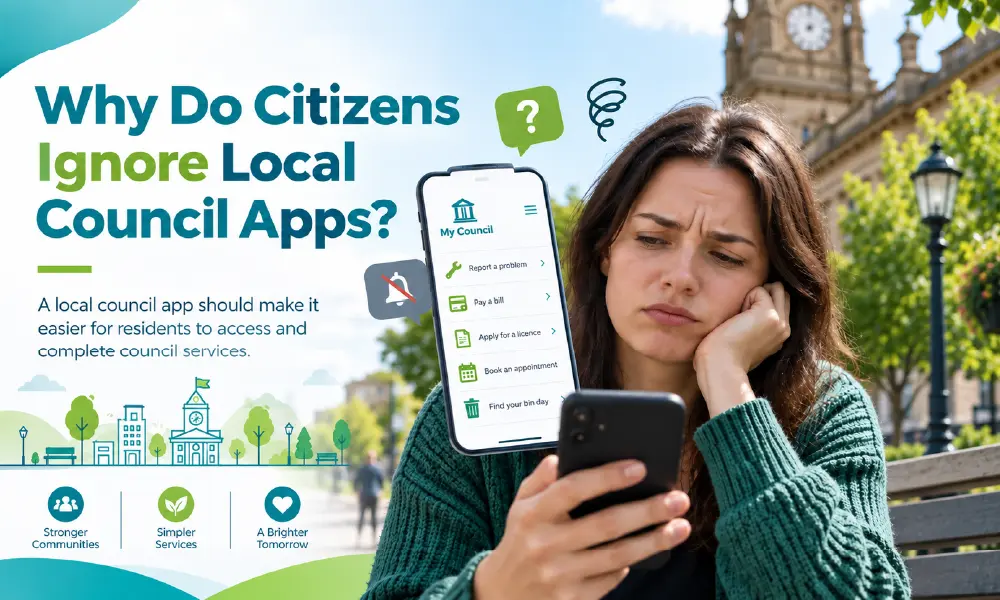
A council app can be well designed and still struggle to get people to use it. The problem may not be the app. It may be the experience around it.
In our previous article, “Why Local Authorities Need More Than a Website,” we looked at why having information online is no longer enough.
A website can tell residents where to go, what forms to complete and which department to contact.
But digital services should help people get things done.
The next question is:
If a local council already has an app, why might citizens still choose not to use it?
The answer is not necessarily poor technology.
Often, it comes down to something much simpler:
The app does not make the resident’s life easier enough.
Why do citizens ignore local council apps?
Citizens may be less likely to use a local council app when it does not provide enough practical value, is difficult to navigate, duplicates existing channels, or gives them little reason to return.
The challenge is therefore not simply getting people to download an app.
It is giving them a reason to use it when they need a council service.
Here are some common barriers.
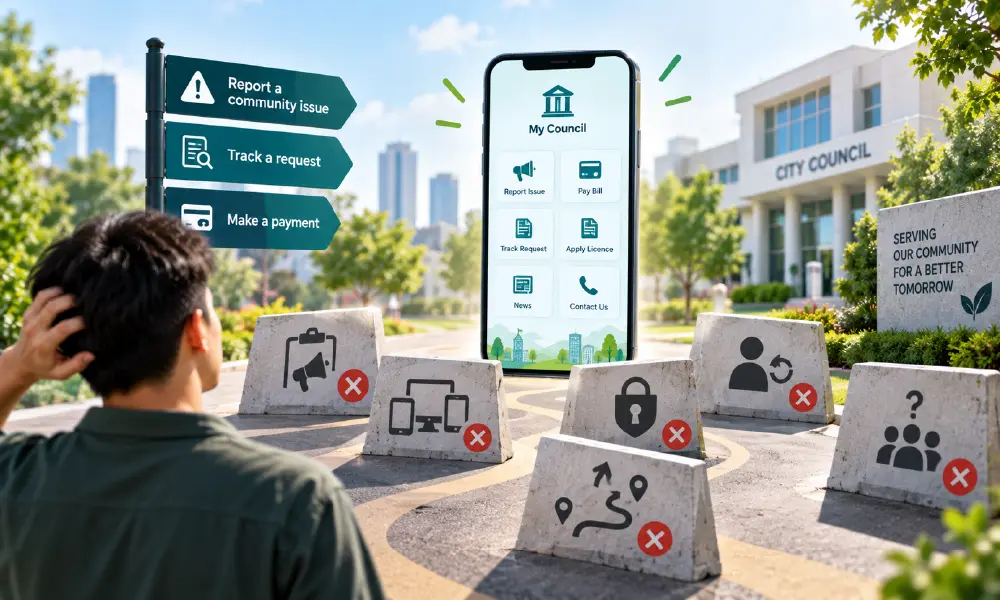
1. The app does not solve a real problem
People rarely download an app simply because a council has launched one.
They download it because they want to do something.
For example:
- Pay an assessment tax
- Apply for a licence
- Submit a complaint
- Book a facility
- Check an application
- Report a community issue
- Track a request
If the app does not help residents complete useful tasks, adoption can become difficult.
This is why the first question should not be:
“What features should we put in the app?”
A better question is:
“What are residents trying to get done?”
That shift in thinking can change the entire digital service strategy.
2. It becomes another information channel
Some council apps mainly provide announcements, news and contact information.
Those things are useful.
But if residents can get the same information from the council website, Facebook page or other channels, they may not see a strong reason to download another app.
There is a difference between:
Information
“Your assessment tax is due.”
and:
Digital service
“View your assessment tax, make payment and receive confirmation.”
The second one gives people a reason to use the platform.
3. Too many platforms create confusion
This is a common challenge in digital government.
A resident may encounter one platform for payments, another for complaints, another for licences and another for information.
From the council’s perspective, each platform may have a clear purpose.
From the resident’s perspective, however, the experience can feel fragmented.
Malaysia’s local government digital landscape already includes multiple online services and platforms, including PBT Pay, OSC 3 Plus Online, eLesen PBT, JKT Gateway and complaint channels.
The question is therefore not simply:
“Can we put this service online?”
It is also:
“Can residents easily find and access the service they need?”
Malaysia’s Smart City Framework has also highlighted the importance of increasing the scope and quality of e-government services, including rationalising overlapping applications and services.
4. The user journey is too complicated
Even when a service is available online, the process can still feel difficult.
Imagine this:
Open app → find department → find service → read instructions → open another link → create another account → submit form → wait for email → check another portal for status
Technically, the service is digital.
But from the resident’s perspective, it is still a lot of work.
Good digital services should reduce unnecessary steps.
The goal is not to move every manual process onto a screen.
The goal is to make the whole journey easier.
5. People do not know the app exists
Sometimes the problem is not the product.
It is awareness.
A council may invest significant resources into developing a digital service but give limited attention to how residents discover it.
If people do not know:
- What the app does
- Which services are available
- Why they should use it
- Where to download or access it
adoption will naturally be limited.
Digital transformation does not end when the platform launches.
Communication and education are part of the service.
6. There is no reason to come back
This is one of the biggest differences between consumer apps and council services.
Residents may not need a council service every day.
They may only need it when they:
- Receive a bill
- Need a permit
- Submit a complaint
- Apply for something
- Make a payment
- Need to check an application
So expecting citizens to open a council app every day may not be the right objective.
A better measure is:
When residents need a council service, can they easily find it and complete it?
That is a more meaningful definition of adoption.
7. Trust matters
Government services involve personal information, payments and official applications.
Residents need to feel confident that the service is legitimate, secure and reliable.
A confusing interface, unclear process or lack of status updates can create uncertainty.
For example, after submitting a complaint, residents naturally want to know:
What happens next?
A simple status update can make a big difference.
Instead of:
“Your complaint has been submitted.”
A better experience is:
Submitted → Assigned → In Progress → Resolved
Transparency helps people understand where their request stands.
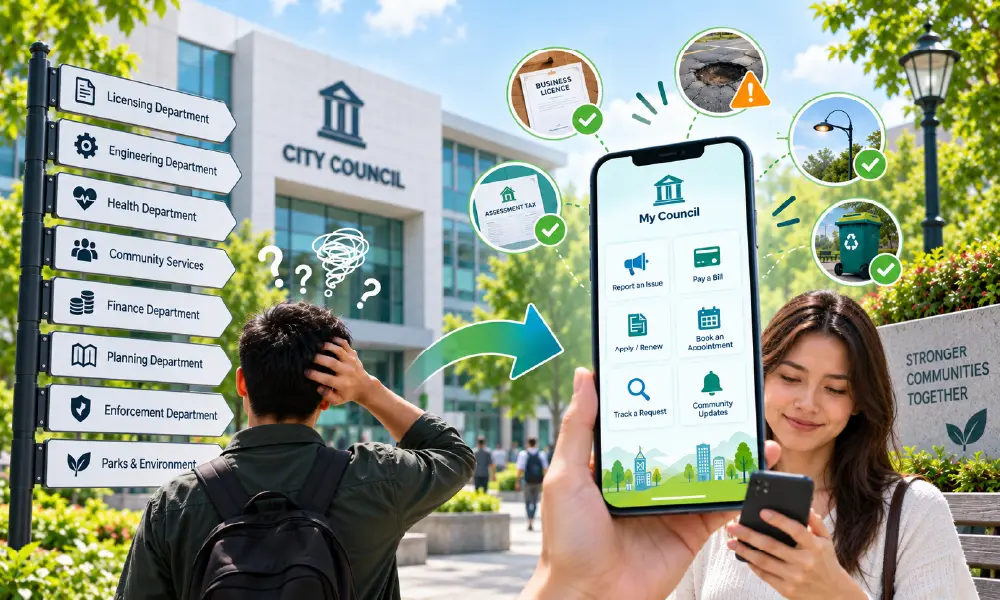
8. The app is designed around departments, not people
This is perhaps the most important point.
Councils are organised into departments.
Residents are not.
A resident does not necessarily think:
“I need to access the licensing department.”
They think:
“I want to renew my business licence.”
They do not think:
“I need the municipal complaints department.”
They think:
“There is a damaged streetlight near my house. I want to report it.”
This is why digital services should be designed around tasks and outcomes, not only organisational structures.
So, what makes a local council app worth using?
A useful local council app should make everyday services:
Useful
Give residents practical services they actually need.
Simple
Make it easy to find and complete a task.
Connected
Bring related services together instead of making residents jump between platforms.
Transparent
Let residents understand what happens after they submit a request.
Relevant
Give people useful notifications and updates when they matter.
The objective is not to create another app.
It is to create a better service experience.
Don't start with the app. Start with the resident.
Before deciding what technology to introduce, local authorities should look at the existing resident journey.
Ask:
- What services generate the most enquiries?
- Which processes require residents to visit the counter?
- Where do residents have to repeat information?
- Which services are spread across different platforms?
- Where do residents struggle to understand the next step?
- Which requests require frequent status enquiries?
These questions reveal where digitalisation can create real value.
Malaysia’s Local Government Department has continued to emphasise PBT digitalisation as a way to improve efficiency and the quality of service delivery to citizens.
That means the conversation should move beyond “Should we have an app?”
The more useful question is:
“How can we make it easier for citizens to interact with the council?”
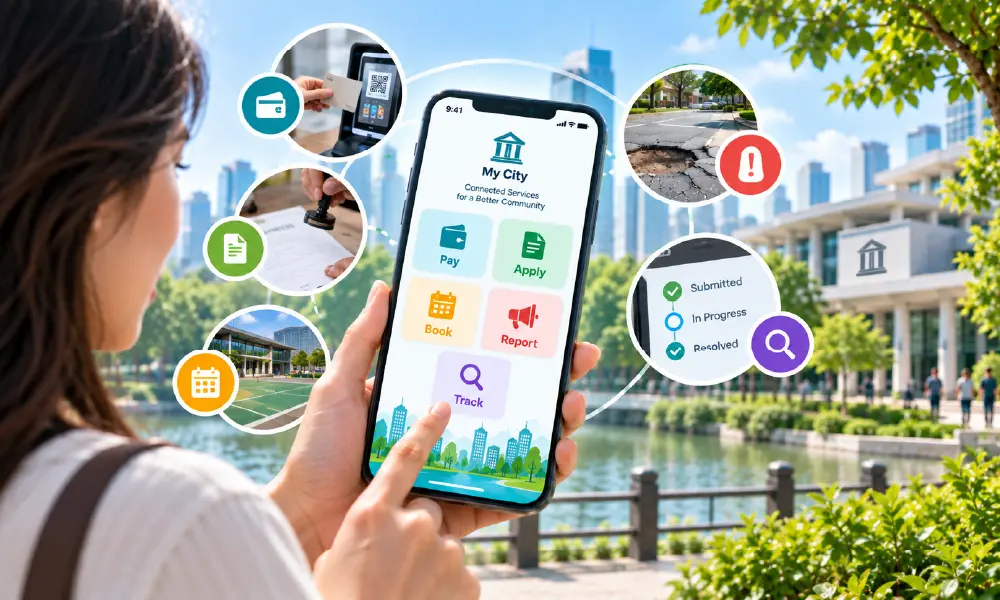
Where does a Smart City Super App fit?
This is where the idea of a Smart City Super App becomes interesting.
Instead of asking residents to navigate multiple channels for different council services, a connected platform can bring relevant services into one digital environment.
For example:
Pay
Taxes, compounds, bills and other payments
Apply
Licences, permits, rentals and facilities
Book
Council facilities and services
Report
Complaints and community issues
Track
Applications and requests
Stay informed
Notifications, updates and council information
This is the approach behind Komuniti+ Smart City Super App.
Komuniti+ is designed to bring multiple council services into one platform, allowing citizens to access, submit and track services through a more consistent digital journey.
For councils, the opportunity is not simply having another mobile application.
It is about creating a connected service channel between the council and its community.
The real measure of success is not app downloads
Downloads are easy to count.
But downloads alone do not tell you whether a digital service is actually useful.
A more meaningful set of questions is:
- How many residents complete a service digitally?
- How many requests are successfully submitted?
- How many residents track their requests online?
- How many enquiries can be resolved without a counter visit?
- How easily can residents find the service they need?
- Are residents getting clearer updates?
In other words:
Don’t measure only whether people downloaded the app. Measure whether the app helped them get something done.
Frequently Asked Questions
Final Thought
A successful local council app does not necessarily need to be the app residents open every morning.
Local government services are different.
People may not need them every day.
But when they do need the council, the experience should be simple.
They should know where to go.
They should know what to do.
And they should know what happens next.
That is what good digital government should feel like.
Not more technology.
Less friction.
About Komuniti+
Komuniti+ Smart City Super App helps local councils bring services together through one digital platform, supporting easier access for citizens and more connected service delivery. Its service model covers areas such as payments, applications, bookings, complaints and request tracking.
One App. One Account. One simpler way to connect with your council.