
Reactive VS Proactive Brand Protection: The Cost Gap No One Talks About
In today’s digital-first economy, your brand is no longer confined to storefront or other official channels. It exists everywhere- on social media, marketplaces, search engines, and even in places you don’t control. While this expansion creates opportunity, it also opens the door to misuse, impersonation, and fraud.
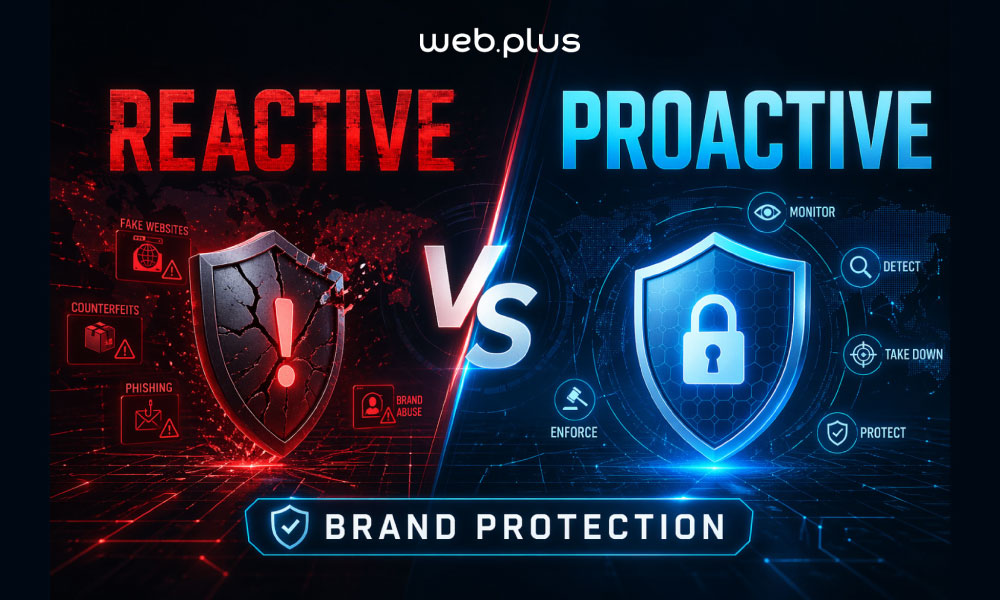
Many businesses still take a reactive approach to brand protection- addressing issues only after they arise. What they really miss out on is that reactive brand protection often leads to higher long-term costs, reputational damage, and lost revenue, even though this may seem cost-effective at first glance. In contrary, a proactive strategy doesn’t only safeguard your brand but also strengthens customer trust and business resilience. Let’s break down the true cost of reactive versus proactive brand protection, and why the latter is the smarter investment.

The Reactive Approach: Paying After the Damage Is Done
Reactive brand protection means responding to threats only once they’ve already impacted your business. This includes taking down fake websites, reporting counterfeit sellers, or addressing phishing campaigns after customers have been affected. While this approach may seem manageable, the hidden costs can be far worse than expected.
- Financial losses multiply fast- When counterfeit products or fraudulent sellers operate unchecked, they directly eat into your revenue. Customers who fall victim to scams associated with your brand may demand refunds, initiate chargebacks, or avoid your brand altogether. According to the Federal Bureau of Investigation Internet Crime Complaint Center (IC3), global losses from phishing and online scams exceeded USD 10 billion in a single year, with brand impersonation and fraudulent domains among the most common attack methods. These incidents often result in both immediate financial loss and long-term customer attrition.
- Reputation damage is hard to reverse- Trust is one of the most valuable assets for a brand, and one of the easiest to lose. A single phishing incident or impersonation campaign can create lasting doubt in your customers’ minds. With that, even if you resolve the issue, rebuilding credibility takes time and consistent effort.
- Operational firefighting drains resources- Reactive strategies often require urgent, manual intervention. Your team ends up constantly chasing issues from filing takedown requests and complaints management to coordinating with platforms, instead of focusing on growth.
- Slow response time takes risks- The threat may have spread across multiple platforms before you can detect and address them. The delay between detection and action amplifies the damage.
Case in Point: Brand Impersonation Through Fraudulent Domains
Case in point: Amazon
Cybercriminals frequently register lookalike domains designed to mimic trusted brands. In multiple reported incidents, scammers created domains resembling Amazon’s official website to send phishing emails and redirect customers to fake payment pages.
Although these fraudulent domains were eventually taken down, the attacks generated customer confusion, increased support requests, and forced the company to invest heavily in monitoring and enforcement efforts. The reputational impact extended beyond the immediate incident, as customers became more cautious when interacting with brand communications.
This example demonstrates how domain misuse can damage customer trust without requiring a system breach.
The Proactive Approach: Preventing Problems Before They Start
Proactive brand protection flips the script. Instead of reacting to threats, it focuses on continuous monitoring, early detection, and rapid mitigation before issues escalate.
- Continuous monitoring across digital channels- Proactive protection involves scanning marketplaces, domains, social platforms, and apps for potential misuse of your brand. With such approach, suspicious activity is identified early, often before customers even notice.
- Early threats detection reduces impact- By catching impersonators, counterfeit listings, or phishing domains at an early stage, you significantly reduce their reach and effectiveness, which also minimizes financial and reputational damage.
- Automated Enforcement Saves Time- Instead of manually chasing every violation, proactive systems automate detection and takedown processes to streamline enforcement and enable strategy focus than firefighting among the team.
- Stronger Customer Trust- When customers consistently encounter authentic, secure brand experiences, trust naturally grows. This brand presence can be achieved via proactive protection.
Breaking Down the Real Cost Difference
Reactive protection avoids upfront investment, but the cost difference becomes clearer when you consider the full picture.
|
Area
|
Reactive Brand Protection
|
Proactive Brand Protection
|
|---|---|---|
|
Cost Predictability
|
Unpredictable, fluctuating costs (legal fees, refunds, crisis response)
|
Fixed, scalable investment with clearer ROI and budget control
|
|
Customer Trust
|
Erodes quickly after incidents; difficult and costly to rebuild
|
Strengthens over time through consistent, secure brand experiences
|
|
Response Time
|
Delayed action allows threats to spread and escalate
|
Early detection enables fast, controlled intervention
|
|
Operational Effort
|
Heavy manual workload; constant firefighting drains internal teams
|
Automated monitoring and enforcement reduce workload significantly
|
|
Long-Term Value
|
Accumulating damage to brand equity that is expensive to reverse
|
Builds sustainable brand value and long-term resilience
|
From Cost Center to Competitive Advantage
Digital threats are evolving rapidly. Fraudsters are becoming more sophisticated, leveraging automation and AI to scale their attacks. This means the window for effective response is shrinking. A reactive approach simply can’t keep up with this pace.
Proactive brand protection, powered by advanced monitoring and automation, ensures that your brand stays one step ahead. It’s not just about responding faster; it’s about preventing issues from gaining traction in the first place.
One misconception about brand protection is that it’s purely a defensive measure when it could take your company to a competitive advantage. Brands that invest in safeguarding their digital presence:
- Build stronger customer confidence
- Maintain consistent brand integrity
- Reduce friction in the customer journey
- Position themselves as trustworthy market leaders

Final Thoughts
The true cost of brand protection isn’t just measured in dollars- it’s measured in trust, reputation, and long-term business value. Reactive strategies may seem sufficient in the short term, but they often lead to greater losses and ongoing challenges. Proactive brand protection, on the other hand, offers a smarter, more sustainable path forward.
If your brand is growing (or planning to), now is the time to shift from reacting to preventing. With the right tools and partners, you can protect what you’ve built while unlocking new opportunities for growth. The question in today’s digital landscape isn’t whether threats will arise, but more so whether you are ready to take an active precautionary action before they do.
In Web.Plus, we help organizations detect threats, protect digital assets, and maintain trust through scalable and proactive solutions. Our digital brand protection solution helps you centralize your domain management efficiently.